


Ragusa Ibla
You have to be clever to come to Ibla, you have to have a certain quality of mind, the taste for the silent and burning tufa, the blind alleys, the useless twirls, the shutters tightly closed on a black look that spies.
Gesualdo Bufalino


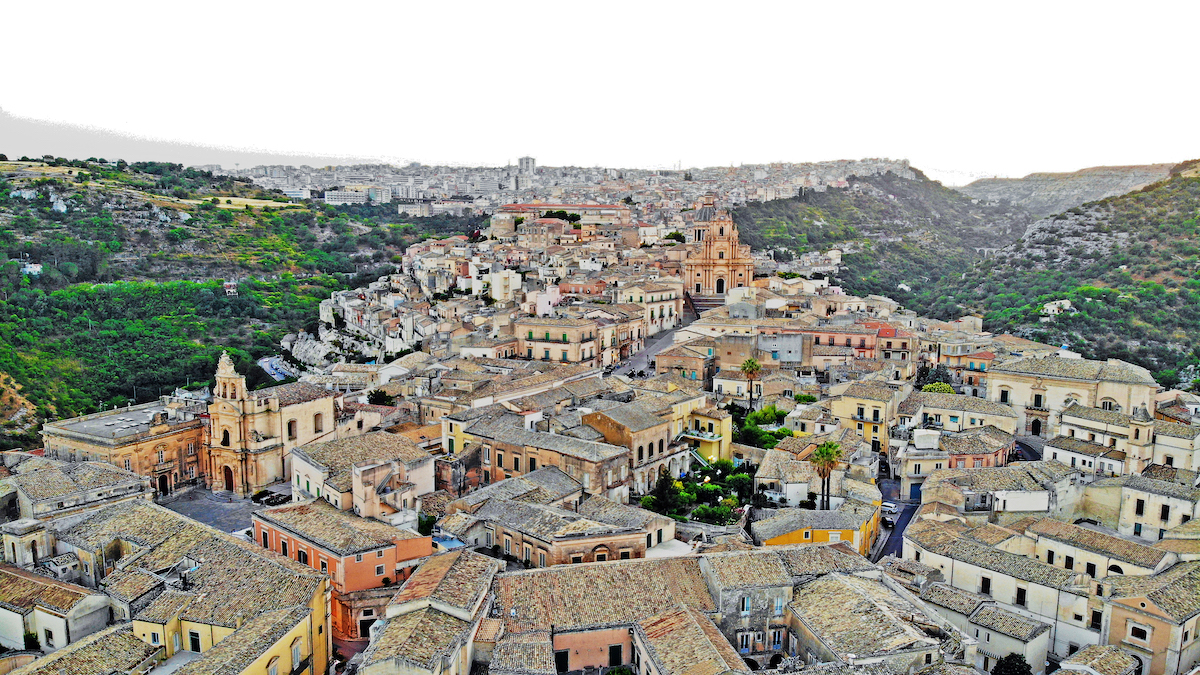
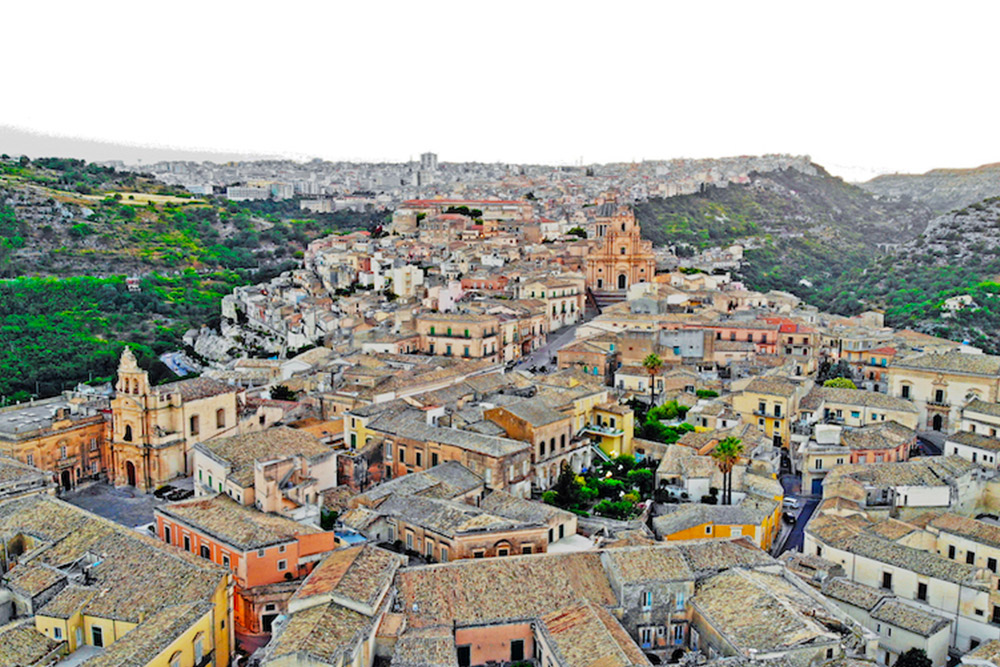
Ragusa Ibla is a place rich in history and culture with its medieval and baroque palaces. It is on a hill and coming from Ragusa you can admire the houses leaning against each other, creating a unique and magical scenery, remembering a nativity scene.
The name "Ragusa" comes from rogous (rogus), a term that in Sicily and Magna Grecia indicated the place of the wheat.
Taking a leap in time, the origins of Ibla date back to the XX Century B.C. when the Sicels settled here and it seems that it is the heir to Hybla Haerea, an aggregate of Siculi villages that were in contact with the Greek and Roman populations.
Visible traces of these first communities are the necropolis carved into the rock that can be seen under S. Maria delle Scale Church or from the Giardino Ibleo, overlooking the valley.
The Arabs, the Normans, the Svevians passed here but the crucial moment was when it became Chiaramonte’s fief and joined the County of Modica. The granting of lands in emphyteusis was decisive for the development of the county as a new category of middle-class owners was created.
Since this economic revolution, a new agricultural landscape characterized by “muretti a secco”(dry walls) was gradually born; these walls were built for different purposes: to fence off the new properties, to divide the fields used for grazing, to allow the rotation of crops.
Dopo il tremendo terremoto del 1693, buona parte dei vecchi nobili preferì ricostruire la città dove sorgeva prima, mentre i massari e la nuova borghesia preferirono ricostruire i nuovi edifici in contrada Patro, facendo così nascere il primo nucleo di Ragusa Nuova. Quest’ultima viene chiamata anche la “Città dei tre ponti”, per la presenza di tre ponti pittoreschi di valore storico.
Since that moment there are two Ragusa: Ragusa Nuova (the new Ragusa) and Ragusa Vecchia (the old Ragusa), the Upper and the Lower Ragusa; they had a different political administration until 1926 when they were reunited in the current provincial capital.
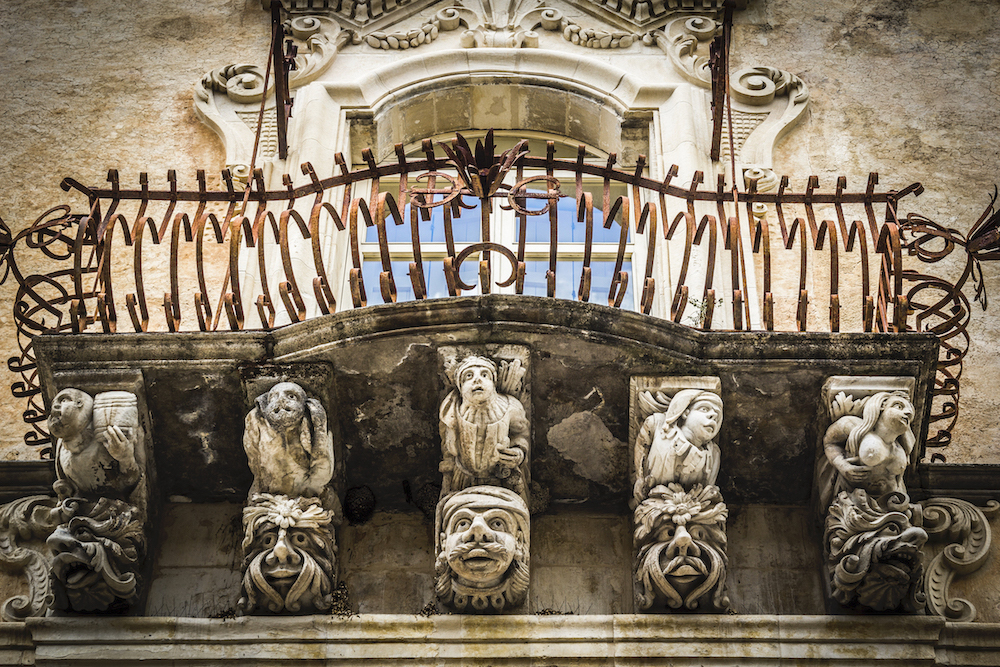
After the earthquake, the ancient city of Ragusa (Ragusa Ibla) was rebuilt in Baroque style. Ibla is rich in churches, baroque palaces with balconies carved by local workers, who were in search of caricature, in order to amaze.
- S. Giovanni’s Cathedral
- S. Giorgio’s Cathedral
- S. Maria dell'Itria Church
- S. Maria delle Scale Church
- S. Filippo Neri Church
- S. Francesco all'Immacolata Church
- Santissime Anime del Purgatorio Church
- S. Giuseppe Church
- S. Maria di Gesù Church
- S. Maria dei Miracoli Church
- Zacco Palace
- Sortino-Trono Palace
- Cosentini Palace
- La Rocca Palace
- Bertini Palace
- The Chancellery or Nicastro Palace
- Battaglia Palace
- Vescovile Schininà Palace

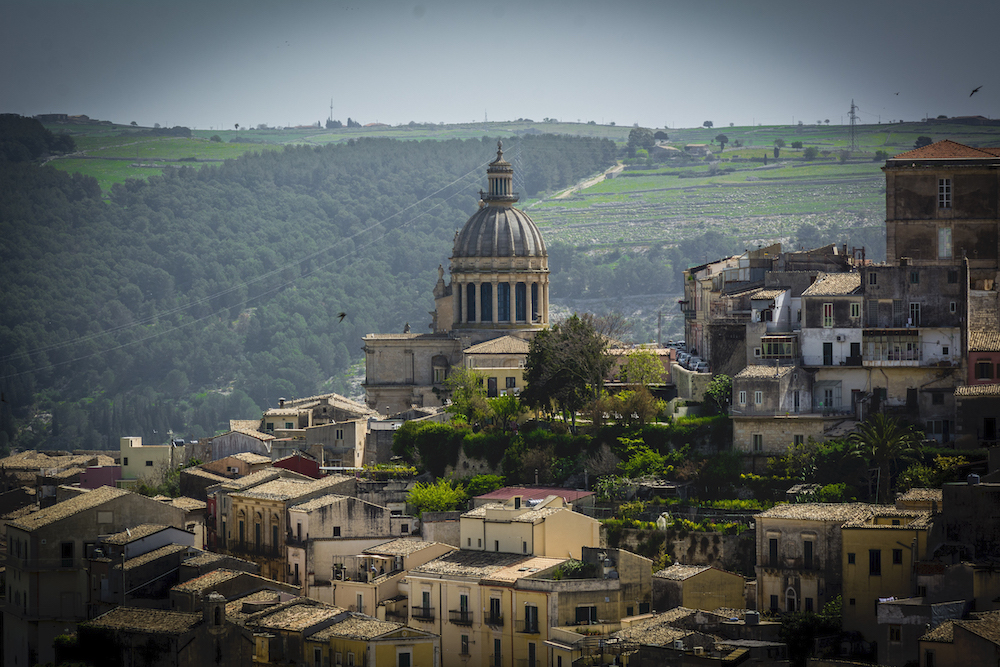
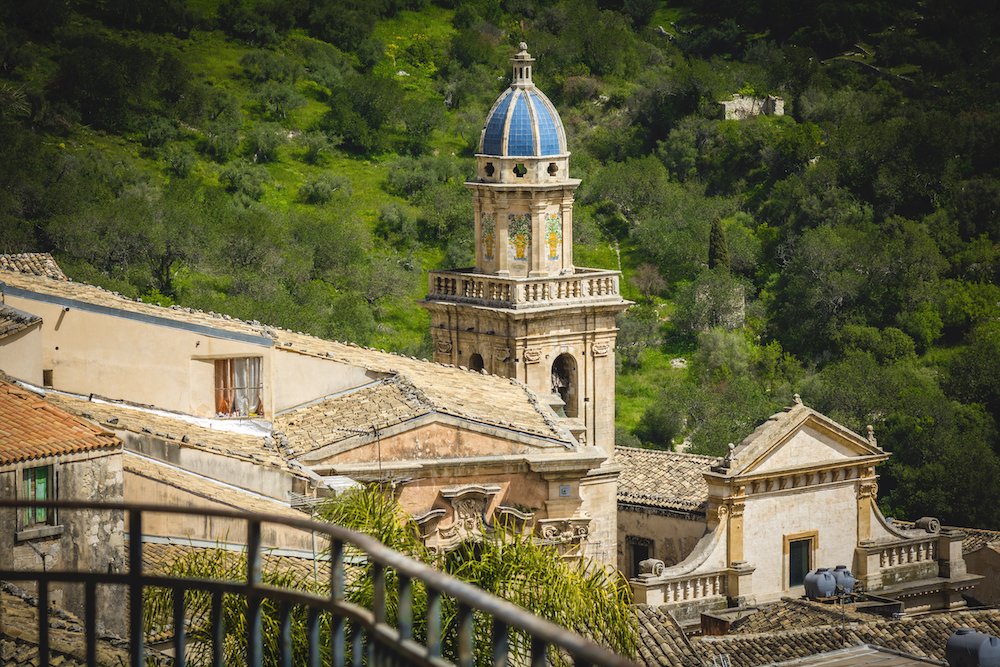
San Giorgio’s Cathedral is the main worship place of Ragusa. After the earthquake, the construction was entrusted to Rosario Gagliardi, architect from Noto. The artist devised a curious perspective game: he oriented the church slightly to the left compared to the square so that the future dome was visible behind the impressive facade. Inside the church, the 13 episodes of martyrdom of the Saint are represented on the stained glass windows. The dome is 43 meters high and it is supported by 16 neoclassical columns; it was built by the master builder Carmelo Cultraro (who was from Ragusa) in 1820, on the model of the Pantheon in Paris. The Dome stands high on the square, thanks to the imposing staircase in front.
There are other "gems" that you can not miss:
- Piazza Pola: connected with Piazza Duomo via Corso XXV Aprile, the Corso is a street full of shops and restaurants and you can look at elegant building as well. Here you can visit San Giuseppe Church.
- Giardino ibleo: it is the oldest garden in Ragusa. Inside there are San Vincenzo Ferreri Church, San Giacomo Church and the Capuchins Church; in the center of the garden there is the impressive war memorial. Crossing the garden, you can reach a panoramic point from where you can admire the Irminio valley.
- Portale di San Giorgio: it is a Catalan Gothic style portal that belonged to San Giorgio Church (it was the right door) built for the will of the Chiaramonte family in 1349. It is one of the few remains after the earthquake in 1693.
- Circolo di Conversazione: it features a neoclassical style; it was a place where the nobility was used to meet to talk about politics, business, etc.. Inside there are seven rooms charachterized by a XIX style and they still mantain the original furnishings. The tempera painted ceiling was realised by Tino del Campo from Ragusa and represents the allegories of the arts and sciences.
- Monelli Palace it represents the continuity with the architecture before the earthquake of 1693, when the palaces were built by the new aristocracy. The facade is simple and linear, but rich in neoclassical decorations. The interior is as it was in the past: the floor is made of pitch and soft limestone and the furnishings is in Art Nouveau style.
- Archaeological Museum Ibleo: it preserves exhibits dating from Neolithic to Late Antiquity found in the area of the province of Ragusa.

Powered by: Formability | PRIVACY POLICY | COOKIE POLICY | P.iva: 01717160889
CIN: 19088009B404456 | CIN: IT088009B4FL7X8UDO